

About Karakalpakstan
Karakalpakstan covers 37% of Uzbekistan’s landmass and is rich in critical resources like gas, oil, uranium, gold, granite, and titanium, holding a unique and complex place in Central Asian history. On December 14, 1990, it became the second entity after Lithuania to declare state sovereignty from the USSR, with its Supreme Soviet adopting a Declaration that granted Nukus authority over state matters, citizenship, and natural resources, while declaring its independence from the USSR. In 1993, Karakalpakstan’s Constitution formalized its status as a “sovereign” state within Uzbekistan, creating a paradoxical dual identity as both a sovereign entity and part of another sovereign state. A temporary 20-year agreement with Tashkent promised a referendum on independence by 2013, but this never materialized. Instead, proposed Uzbek constitutional reforms in 2022 aimed to strip Karakalpakstan of its secession rights and reduce its sovereignty, triggering mass protests in Nukus that were met with a violent crackdown by Uzbek security forces, underscoring the region’s ongoing struggle for self-determination.
Since then, concerns have grown over efforts to suppress Karakalpak culture and identity. Authorities have reportedly replaced Karakalpak-language signage with Uzbek and Russian and have been accused of desecrating religious and cultural heritage sites.
Today, Karakalpakstan remains a region of geopolitical and cultural significance, as debates over sovereignty and identity rage on.


Via Serica: Honoring Heritage. Defending Human Dignity

For
Every Culture,
Every Voice,
Every Right.
Upcoming Events

Meet the Team
Explore the dedicated individuals who drive Via Serica's mission forward. Get to know our board members and advisory team through their inspiring stories and contributions to cultural heritage

Robert Simmons
Vice President
Mr. Simmons is a former U.S. Foreign Service Officer and former President of a New York-based private equity firm. A native of New York City, he began his career as a Wall Street analyst and later served as a finance professor at New York University. He has appeared extensively on CNN and CNBC, speaking on the role of the private sector in global affairs.
Mr. Simmons holds degrees in business from Columbia University and Baruch College, graduating cum laude. He also studied international relations as a scholar at the American University of Rome.

President
The President of Via Serica leads the organization with extensive experience in international relations, cultural preservation, and regional advocacy. With roots in Karakalpakstan, they are dedicated to advancing cultural resilience, empowerment, and global awareness. While their personal identity remains protected for security reasons, their passion, determination, and impact are unmistakable, guiding the organization toward a brighter future for the region and beyond.

Ms. Gelles
Treasurer
Ms. Gelles brings legal and compliance experience, with a strong focus on contract management, visa advisory, and international law.
Ms. Gelles has advised on USAID programs, trained agency staff, and held legal roles with the American Immigration Agency and the Moscow Bar Association. Her financial oversight skills, combined with her deep legal expertise, make her a valuable steward of the Foundation’s fiscal responsibilities.

Linda Sellevag
Secretary
Linda Sellevag is a former Senior Communications Analyst at the U.S. Government Accountability Office, bringing decades of leadership and insight in public service. Her global perspective is shaped by her work with ESOL programs, ministry, and extensive travel across Asia, India, and Argentina. Fluent in Spanish and deeply engaged with international scholars, Linda’s commitment to cross-cultural communication and education makes her a powerful asset to our vision.

Sébastien Peyrouse
Chair of Research and Policy Advisory Committee
Sébastien Peyrouse, PhD, is Director of the Central Asia Program and Research Professor at the Institute for European, Russian and Eurasian Studies at George Washington University. He is also a researcher with Europe–Central Asia Monitoring (EUCAM) in Brussels.
Dr. Peyrouse has more than two decades of experience studying and working on Central Asia. He has held research fellowships at leading policy institutions in Washington, including the Woodrow Wilson International Center for Scholars and the Central Asia and Caucasus Institute at Johns Hopkins University.
His areas of expertise include political systems in Central Asia, economic and social development, Islam and religious minorities, and the region’s geopolitical positioning, particularly in relation to China, India, and South Asia. He is the author and editor of numerous influential books and publications on Central Asia, and his work has appeared in leading academic and policy journals.
Dr. Peyrouse brings deep regional knowledge and policy expertise to the Board of Directors of Via Serica, supporting its mission to advance minority rights and informed international engagement on Central Asia.

Steve Swerdlow
Global Advocacy Chair
Steve Swerdlow, Esq., is a human rights lawyer and Associate Professor of the Practice of Human Rights in the Department of Political and International Relations at the University of Southern California, where he teaches international human rights law, human rights research and advocacy, and human rights across Eurasia.
A leading expert on the former Soviet region, Mr. Swerdlow previously served for nearly a decade as Senior Central Asia Researcher at Human Rights Watch (2010–2019), where he led the organization’s work on Uzbekistan and Tajikistan, founded its Kyrgyzstan field office, and conducted extensive field missions across Eurasia. His work has focused on political repression, minority rights, religious freedom, and accountability for serious human rights violations.
Mr. Swerdlow has longstanding expertise on ethnic minorities, including the Ahiska (Meskhetian) Turks, having worked as a legal officer with the International Organization for Migration’s U.S. Meskhetian Resettlement Program and authored influential publications on the group’s history, identity, and human rights. His scholarship has appeared in leading academic and policy outlets, including The Diplomat and the California Law Review.
Mr. Swerdlow is a graduate of UC Berkeley School of Law and Columbia University’s School of International and Public Affairs.
As Global Advocacy Chair, Mr. Swerdlow brings deep regional expertise, legal acumen, and international advocacy experience to support Via Serica’s mission to advance minority rights and accountability in Central Asia.

Bruce Pannier
Lead Advisor, Eurasian Partnership
Bruce Pannier was the host of the Radio Free Europe/Radio Liberty’s Majlis podcast and author of RFE/RL’s newsletter Central Asia in Focus. Prior to joining RFE/RL in 1997, Bruce worked at the Open Media Research Institute in Prague. In 1992-93, he led a sociological project in Central Asia sponsored by the University of Manchester and the Soros Cultural Initiative Foundation. During that time he lived in villages in Kazakhstan, Kyrgyzstan, Turkmenistan and Uzbekistan. Bruce studied at Tashkent State University in the summer of 1990 and studied at Columbia University under Professor Edward Allworth. Bruce has also written for The Economist, Janes Intelligence, Oxford Analytica, Freedom House, The Cairo Review, the FSU Oil & Gas Monitor, Energo Weekly, The Times of Central Asia, and BNE Intellinews. Currently, Central Asia Fellow at the Foreign Policy Research Institute, member of the advisory board at the Caspian Policy Center, member of the External Advisory Board, European Neighbourhood Council, and Research Fellow at the Turan Research Center.

Tleubike Yuldasheva
Board Member
Tleubike Yuldasheva is a Karakalpak civic and human rights activist known for sustained advocacy on social and community rights. Reporting on her work traces her public activism to at least 2013, including participation in peaceful protest activity in Nukus in 2019 focused on social and economic concerns.
Following the 2022 unrest in Karakalpakstan and subsequent transnational pressure on members of the Karakalpak diaspora, Yuldasheva was detained in Kazakhstan in November 2022 after Uzbek authorities sought her extradition. She spent roughly a year in pretrial detention and was released in November 2023.

Ziuar Mirmanbetova
Board Member
Ziuar Mirmanbetova is a Karakalpak community advocate originally from Sovereign Karakalpakstan who has worked in the food industry and raised a family while remaining committed to the wellbeing of her people. In her own words, she identifies as a “daughter of Karakalpakstan” and has consistently used her voice to speak about the pressures facing Karakalpaks, including political repression, fear of arbitrary imprisonment, and environmental concerns linked to water and the Aral Sea region.
In late 2022, she was detained in Almaty following an Uzbek request for extradition; she spent roughly a year in detention and was released in early October 2023.

Koshkarbay Toremuratov
Board Member
Koshkarbay Toremuratov is a Karakalpak human rights defender, activist, and dissident, widely regarded as one of the leading figures of the Karakalpak diaspora in Kazakhstan and a vocal advocate for the sovereign status of the Republic of Karakalpakstan.
He graduated in 1998 from the Faculty of Economics at Berdakh Karakalpak State University in Nukus and later held senior leadership roles in youth and civic organizations. In 2006, due to political pressure, he was forced to leave Uzbekistan and relocate to Kazakhstan, where he became active in defending the rights of Karakalpak migrants and co-founded the Karakalpak diaspora in Almaty.
Arrested in 2014 during a visit to Karakalpakstan, Toremuratov was sentenced to six years in prison in a case widely viewed as politically motivated. He was released on parole in 2018. Since 2012, he has administered influential Karakalpak-language media platforms, including PIKIR and PIKIR LIVE. In 2022, he publicly opposed constitutional amendments threatening Karakalpakstan’s sovereignty and was later detained in Kazakhstan under an extradition request. After his release in 2023, he traveled to Europe seeking political asylum.

Karlibay Bekmuratov
Board Member
Karlibay is a Karakalpak human rights advocate and founder of Karakalpakstan News Channel. For many years, he has worked to raise international awareness of human rights, political repression, and threats to fundamental freedoms in Karakalpakstan.
Bekmuratov has advocated for Karakalpak rights before international institutions, including the Organization for Security and Co-operation in Europe (OSCE). He has participated in OSCE/ODIHR human dimension meetings in Warsaw since at least 2019 and has spoken about political persecution, restrictions on fundamental freedoms, and transnational repression affecting Karakalpak activists.
Through his media and advocacy work, Bekmuratov has helped bring greater international attention to developments in Karakalpakstan and amplify voices that face significant restrictions at home. He brings to Via Serica's Board extensive experience in grassroots advocacy, independent media, and international human rights engagement.
Mission and Values
Via Serica is 501(c)(3) nonprofit organization, dedicated to preserving endangered languages and cultures, advancing women’s rights, advocating for human rights, and empowering marginalized communities along the Silk Road. With a special focus on the Karakalpak people, we aim to collaborate globally and amplify voices that deserve to be heard. Join us in our mission to make a meaningful impact and create a more inclusive world.
Initiatives
Our Current Projects
Explore our ongoing projects that are designed to protect and celebrate the Karakalpak culture while promoting human rights education. Learn how we are working to support communities across the Silk Road region and beyond.

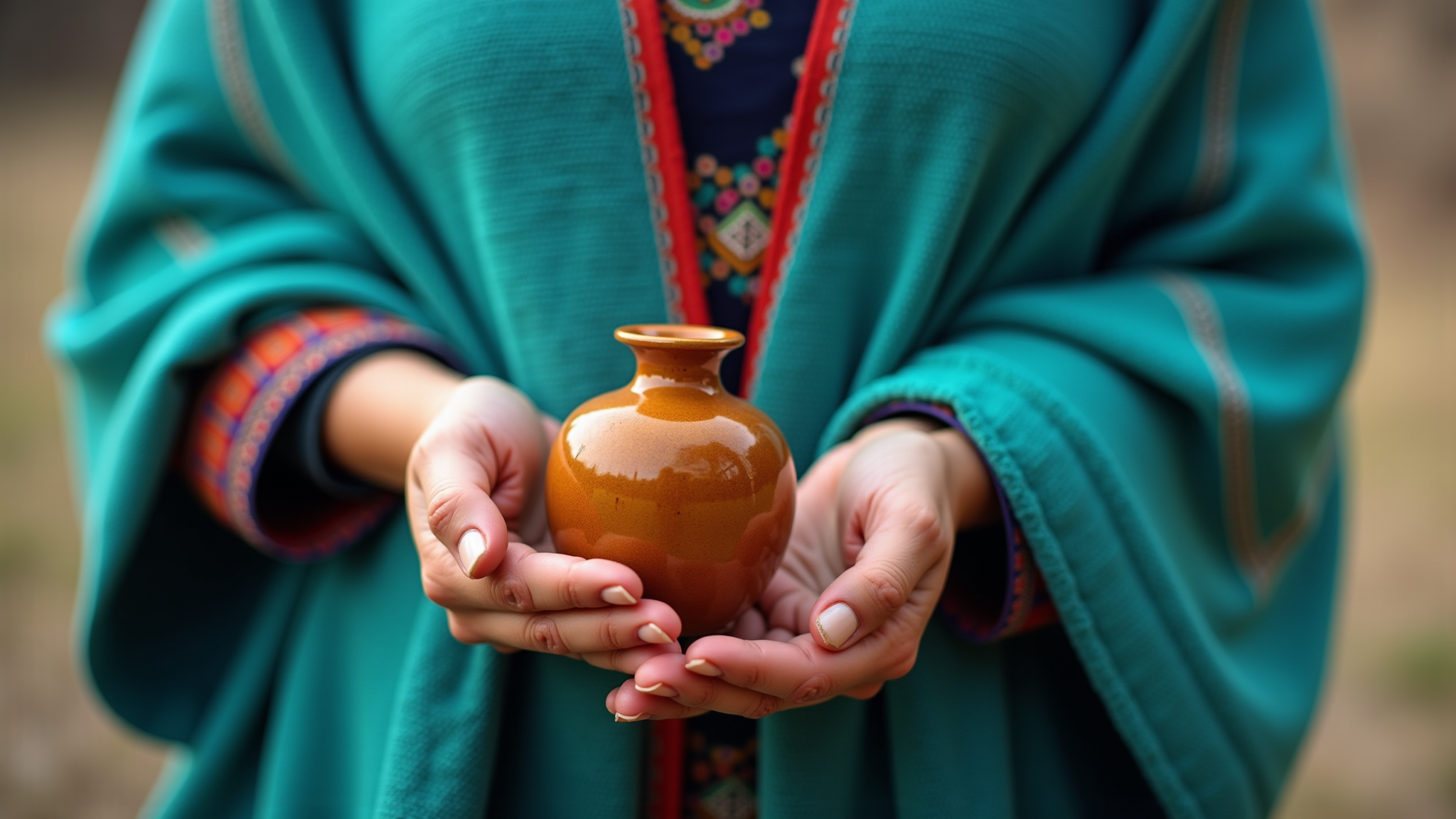
Cultural Preservation
Dedicated to preserving endangered languages and promoting cultural heritage
Supporting the Karakalpak people through community-driven projects and initiatives
Human Rights Education
Educating communities on human rights issues and advocacy
Promoting awareness and understanding of human rights principles

Community Support
Empowering marginalized communities by providing essential support and resources
Creating opportunities for sustainable development and growth